
Introduction
Life is unpredictable. One moment everything is going smoothly, and the next, an unexpected event—like a medical emergency, car accident, or natural disaster—can disrupt your finances and peace of mind. That’s where insurance comes in. It acts as your financial safety net, protecting you from major losses and helping you recover faster.
If you’ve ever felt confused by the different types of insurance in the USA, you’re not alone. With so many options available, it can be overwhelming to know what you actually need. In this guide, you’ll break everything down step by step, so you can confidently understand, choose, and use insurance to protect your future.
Table of Contents
Overview of Types of Insurance in the USA
When you hear the term types of insurance in the USA, it refers to the various policies designed to protect individuals, families, and businesses from financial risks.
What Is Insurance?
Insurance is a contract between you and an insurance company. You pay a regular fee (called a premium), and in return, the company helps cover certain financial losses if something unexpected happens.
Purpose of Insurance
The main goals of insurance are:
- Protect your finances from large, unexpected expenses
- Provide peace of mind
- Help you recover quickly after a loss
- Ensure long-term financial stability
In the United States, insurance plays a crucial role in everyday life—from healthcare to driving to homeownership.
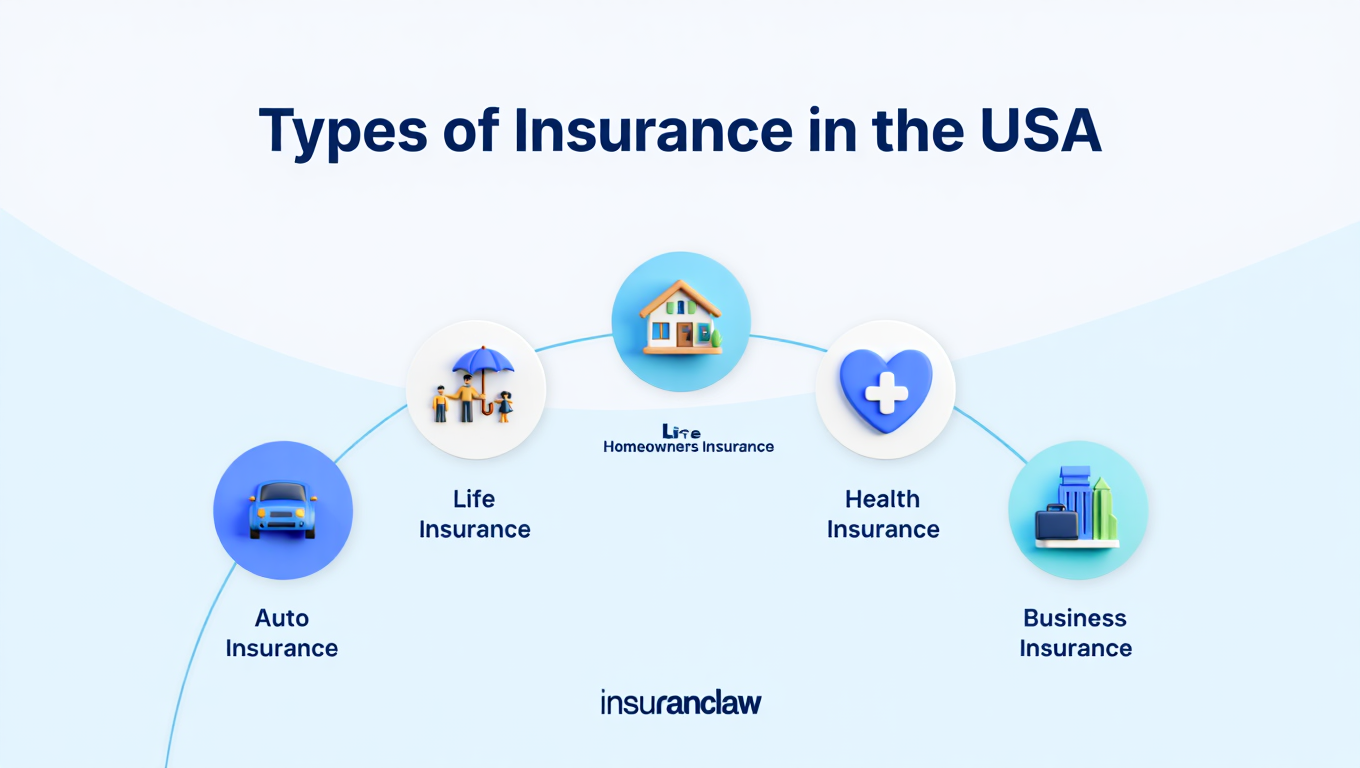
Types of Types of Insurance in the USA
Let’s explore the most important categories so you can understand what each one covers and why it matters.
Health Insurance
Health insurance is one of the most essential types of insurance in the USA. It helps cover medical expenses such as doctor visits, hospital stays, prescriptions, and preventive care.
Example:
If you need surgery that costs $20,000, your health insurance may cover most of it, leaving you with a smaller out-of-pocket amount.
Common plans include:
- Employer-sponsored insurance
- Individual marketplace plans
- Government programs like Medicaid and Medicare
Auto Insurance
If you drive in the United States, auto insurance is legally required in most states.
What it covers:
- Damage to your vehicle
- Injuries to others
- Liability if you cause an accident
Example:
If you accidentally hit another car, your auto insurance helps pay for repairs and medical bills.
Types of auto coverage:
- Liability coverage
- Collision coverage
- Comprehensive coverage
Homeowners Insurance
Homeowners insurance protects your home and belongings against risks like fire, theft, and natural disasters.
What it includes:
- Property damage coverage
- Personal belongings protection
- Liability coverage
Example:
If a fire damages your home, your insurance helps pay for repairs or rebuilding.
If you’re renting instead of owning, you can get renters insurance, which covers your personal items.
Life Insurance
Life insurance provides financial support to your family if you pass away.
Why it matters:
- Covers funeral costs
- Replaces lost income
- Helps your family maintain their lifestyle
Main types:
- Term life insurance (temporary coverage)
- Whole life insurance (lifetime coverage with savings component)
Disability Insurance
This type of insurance replaces part of your income if you become unable to work due to illness or injury.
Example:
If you suffer an accident and can’t work for months, disability insurance ensures you still receive income.
Business Insurance
If you own a business, this type protects you from risks like lawsuits, property damage, and employee injuries.
Examples:
- General liability insurance
- Workers’ compensation
- Professional liability insurance
How Types of Insurance in the USA Work
Understanding how insurance works makes it much easier to use it effectively.
Step-by-Step Process
- Choose a Policy
You select a plan based on your needs (health, auto, home, etc.). - Pay Premiums
You pay monthly or yearly fees to keep your coverage active. - Coverage Activation
Once active, your policy protects you against specific risks listed in the contract. - File a Claim
If something happens (like an accident), you submit a claim to your insurer. - Deductible Payment
You may need to pay a portion of the cost (called a deductible). - Insurance Payout
The company covers the remaining eligible costs.
Benefits of Types of Insurance in the USA
Key Advantages
- Financial Protection: Prevents large out-of-pocket expenses
- Peace of Mind: You feel secure knowing you’re covered
- Legal Compliance: Required for things like driving
- Access to Services: Especially important for healthcare
Long-Term Value
- Helps you build financial stability
- Protects your assets over time
- Supports your family in emergencies
- Encourages responsible financial planning
Potential Risks or Drawbacks
While insurance is essential, it’s not perfect.
Common Limitations
- Cost of Premiums: Can be expensive over time
- Coverage Gaps: Not everything is covered
- Deductibles: You still pay part of the cost
- Claim Denials: Some claims may be rejected
Important Reminder
You need to read your policy carefully. Understanding what’s included—and what’s not—can save you from surprises later.
How to Choose the Right Types of Insurance in the USA
Choosing the right insurance isn’t about buying everything—it’s about buying what fits your life.
Factors to Consider
- Your Lifestyle: Do you own a home? Drive often?
- Your Budget: How much can you afford monthly?
- Risk Level: Higher risk = more coverage needed
- Dependents: Family members relying on your income
- Legal Requirements: Some insurance is mandatory
Expert Tips
- Compare multiple insurance providers
- Bundle policies to save money
- Choose a higher deductible for lower premiums (if you can afford it)
- Review your coverage annually
- Don’t over-insure or under-insure
Common Mistakes to Avoid
Avoid these common errors when dealing with insurance:
- Not Reading the Policy: Leads to misunderstandings
- Choosing Based on Price Alone: Cheap isn’t always better
- Ignoring Deductibles: Can lead to unexpected costs
- Skipping Coverage: Leaves you vulnerable
- Not Updating Policies: Life changes require updates
Tips for Getting the Best Results
If you want to maximize your insurance benefits, follow these practical tips:
- Shop around and compare quotes regularly
- Maintain a good credit score (affects premiums)
- Take advantage of discounts (safe driver, bundling, etc.)
- Keep detailed records for claims
- Work with a licensed insurance agent if needed
Frequently Asked Questions (FAQ)
1. What is the most important type of insurance in the USA?
Health insurance is often considered the most important because medical costs can be extremely high without coverage.
2. Is insurance mandatory in the United States?
Some types are required, like auto insurance in most states. Others, like health insurance, may depend on regulations and personal choice.
3. How much insurance coverage do you need?
It depends on your lifestyle, income, and risks. For example, homeowners need property coverage, while renters may not.
4. Can you have multiple insurance policies?
Yes, you can have multiple policies for different needs, such as health, auto, and life insurance.
5. What happens if you don’t have insurance?
You may face high out-of-pocket costs, legal penalties (for required insurance), and financial risk.
6. How can you lower your insurance premiums?
- Increase your deductible
- Bundle policies
- Maintain a good credit score
- Look for discounts
7. When should you review your insurance?
At least once a year or after major life events like marriage, buying a home, or having children.
Conclusion
Understanding the types of insurance in the USA is one of the smartest financial decisions you can make. Insurance isn’t just about paying premiums—it’s about protecting your future, your family, and everything you’ve worked for.
When you take the time to learn how insurance works, compare your options, and choose the right coverage, you gain more than just protection—you gain confidence and peace of mind.
Now that you have a clear roadmap, the next step is simple: evaluate your needs, explore your options, and take action to secure the protection you deserve.
For More Articles Visit : insuranclaw